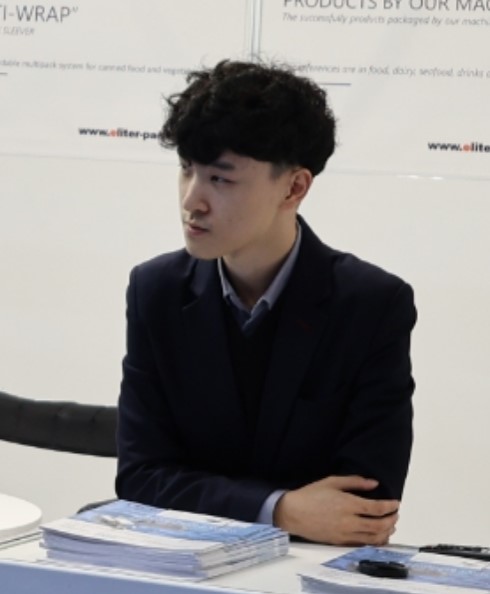
A personal reflection on family succession, engineering ambition and the future I want to build for ÉLITER. When people hear that I am the third generation of a family business, they often assume that my path was already decided for me.
In some ways, that is true. Packaging machinery has been part of my family for three generations. I grew up around machines, workshops, technical drawings and conversations about production. But inheriting a business and deciding what that business should become are two completely unique things.
When I took over from my father and created ÉLITER as a new international identity, I did not want to simply continue producing the same machines in the same way. I wanted to reconsider our position, our engineering approach and the kind of customers we hoped to serve.
Competing on Price Was Never Going to Be Enough
China has no shortage of packaging machinery manufacturers. Many companies build similar machines, use similar structures and compete primarily through price.
I believed that continuing along this path would eventually leave us with only one question:
- How much cheaper can we make the next machine?
That was not the question I wanted ÉLITER to answer. The question I preferred was:
- How can a small Chinese manufacturer genuinely compete through engineering, performance and quality?
Our transformation began with that objective. We started replacing inherited machine concepts with newer platforms based on servo control, improved hygiene, better accessibility and greater flexibility.
A Small Team Can Still Think Ambitiously
ÉLITER is not a large corporation. We are a focused team, and I remain directly involved in engineering discussions, customer projects and product development.
Some may see our size as a limitation. I see it differently. Decisions do not need to pass through several layers of management before reaching the people actually designing and building the machine.
Being small means we must choose our direction carefully. We cannot develop every kind of packaging machine for every market. We therefore concentrate on areas where our experience can create a real advantage, particularly cartoning, cardboard sleeving and customized secondary packaging automation.
The Machine Should Follow the Packaging Requirement
Customers sometimes begin a conversation by asking for a particular machine model. My first question is usually not about the machine.
I want to understand the product, the packaging material, the required presentation, the production speed, the available floor space and the formats that may need to be introduced later.
Two finished packages may look almost identical while requiring completely different packaging processes. A wrap-around sleever may provide better flexibility for one product, while an end-load cartoner may be more appropriate when higher speed or a smaller footprint is the priority.
This is why I do not believe machinery should be selected only from a catalogue. The correct solution begins with understanding the packaging task. The machine comes afterwards.
Flexibility Is No Longer an Optional Feature
Food manufacturers are being asked to produce more product variations, promotional packs and seasonal formats, often within the same production environment.
A machine may perform perfectly with one format, but that is no longer enough. It must also remain practical when operators change sizes, introduce new packaging materials or respond to changing market demand.
This is why we pay close attention to tool-less adjustment, recipe-based settings, accessible mechanisms and simplified servo-driven structures. Flexibility should not exist only in a sales brochure. It should be visible in the daily experience of the people operating and maintaining the machine.
Sustainability Must Work in Production
Cardboard packaging is often presented as an alternative to plastic shrink film and other forms of secondary packaging. I support this direction, but sustainability cannot be treated only as a marketing statement.
A recyclable or fiber-based package still has to run reliably on the production line. Recycled board may vary in stiffness, surface quality and consistency. A sleeve designed to reduce material may become more difficult to pick, fold or glue.
The responsibility of a packaging machinery company is not simply to say that paperboard is more sustainable. We must help make sustainable packaging technically workable.
That requires cooperation between the product manufacturer, packaging designer, material supplier and machine builder from an early stage.
What I Want ÉLITER to Become
I do not expect ÉLITER to become the largest packaging machinery manufacturer. That has never been my objective.
I want us to become a company known for understanding the relationship between the product, the package and the machine.
I want customers to involve us before every detail has already been finalized—not because we want to control their project, but because early technical collaboration often prevents expensive compromises later.
My vision is for ÉLITER to be more than an equipment supplier. We should be able to look at a new tray, sleeve, multipack or carton and discuss not only how to automate it, but whether the packaging structure itself is suitable for reliable production.
That is the direction I chose when I took over the family business. It is slower and more difficult than competing through price, but it gives us a reason to keep improving.
And for me, that is what the third generation should do: not simply preserve what was inherited, but decide what deserves to be built next.