


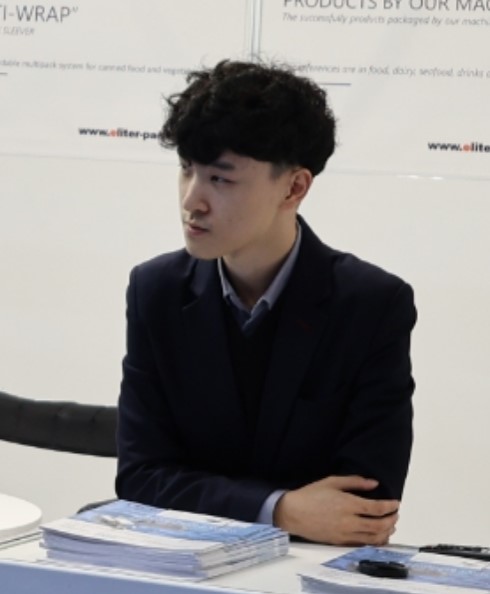
Zhiwei Bao
Owner of ÉLITER Packaging Machinery

You cannot have your cake and eat it. Clients reaching out to us frequently asking for a question which I have to constantly unpack the underlying trade-offs, which is “Can the machine cover more packaging formats?”
Packaging machines are usually promoted to be versatile and allegedly compatible for a wide range of products and sizes. But once boiling down to a specific project with a certain kind of machine to propose, the claim turns out to be a hype that goes against technical feasibility. A machine such as a sleever, cannot handle at the same time different containers and sizes, with varied formats, so do other kinds of machines that engage engineering approaches case by case. This is not for the fault of machine, for promotion neglects the certain requirements of each project, and sales may also manipulate the understanding for forcing a deal.
Taking a cartoner as an example, while generally a cartoning machine is said in its catalogue to cover a range of carton sizes, the claim further narrows down at engineering stage to a further limited range when several SKUs are confirmed to be handled in a project.
To instance, the selection of chain pitch as well as the height of lugs on the chains are determined to properly have the compatibility achieved among these SKUs. However, supposing a future size of carton which would have never been informed to the manufacturer, it is by no means said to be covered for the project even if the size is among the machine’s stated range of coverage. After all, a manufacturer is instructed to cover the given SKUs while there is guarantee that a future size uninformed presently is covered as well for the project, for doing so it extends the manufacturer’s liability unlimitedly.
Consider a cartoner equipped with a 06B lug chain featuring a 9.525 mm pitch and 18 units per station.
When a pair of these lug chains is arranged in a staggered configuration, with one leading and the other lagging, the specific CAD layout reveals that the machine is practically limited to carrying carton blanks with a width ranging from 89 mm (not the narrowest coverage) to 127.63 mm.
The drawing below visualizes how the selection of chain models and pitches per station eventually impose a physical and mechanical limitation for application and have the machine’s size coverage capability further narrowed down than the theoretical engineering specifications defined during the initial design phase.

Fig 1. Detailed CAD engineering drawing of lug chain configurations for a cartoner’s lug chain section.
Left: Comparison of two different lug spacing configurations with annotated dimensions of 127.63mm and 89mm.
Right: View of a longer chain segment with an annotated dimension of 172.45mm
The same concept applies to another section on a cartoner referred to as the bucket conveyor which consists of as well a pair of plastic chains with lugs for carrying the products in between.

Fig 2. Drawing Demonstration in SolidWorks Showing How Bucket Conveyor on a Cartoner Has its Plastic Lug Chains Staggered
Apart from the selection of standard mechanical components that will set physical and mechanical limitation to a machine’s coverage of formats and sizes, there are more concerns around those non-standard components tailored for running certain SKUs along the machine such as guides, rails, customized components like plastic lugs, and among others, engineering of functional stations which are never something standard.
The case is worse for a sleeving machine which is often engineered with certain level of customization, now that containers to be handled by a sleever never follow a fixed pattern like that of rigid six-side cartons. Unlike standard six-sided cartons that conform to uniform geometric templates, primary packaging containers such as yogurt cups and ready-meal trays feature non-standardized topologies, with highly variable draft angles, top-to-bottom ratios, and flange profiles.
Designing a sleever to accommodate a diverse range of containers and packaging formats dramatically escalates system complexity and engineering scope. Because these containers lack standardized geometric profiles, the conveying lugs must be custom-engineered with specific topologies to match each unique form factor.


Fig 3. Consider the Compatibility: Can these Two Formats be Covered on a Same Set of Sleever?
Consequently, despite the machine’s broad theoretical design envelope, operators are compelled to execute full-line replacements of all lugs during format changeovers, which is evidently unrealistic and a nightmare for user experience.
Frequently changeover also leads to the loss of functional consistency, not for the fault of machine but for the capability of your in-house technicians and engineers who are not essentially equipped with the same level of expertise as that of technicians of the manufacturer. You are eventually then risking your production and the successfulness of your project.
Take caution when dealing with a manufacturer’s representative who always says “yes” regarding your request of covering more packaging sizes and formats on a machine. Person who is responsible for sales and marketing does not necessarily have the engineering sense as that of a design and automation engineering, while the former is at the frontline for secureing business match and then pass the tasks to the latter at execution stage.
Information contained in the catalogue is not absolutely fixed, definite or even correct from an engineering perspective when evaluating projects at case-by-case foundation. People do not have the essential engineering acumen when addressing the features in the catalogue – they are standard but they do not necessarily apply for your case.
Equivalently, who are with the engineering ethics should remind you of the underlying trade-offs when forcing the machine with more coverage against different products without a common pattern.
Since taking over his family business in 2021, Zhiwei Bao has developed hands-on expertise in mechanical engineering, industrial automation and carton-sleeving systems. His involvement in R&D and product strategy has helped ÉLITER build solutions for single packs, multipacks and cluster packs across a wide range of production speeds.
Check Zhiwei Bao's Profile
Owner of ÉLITER Packaging Machinery
Read through the stories about ÉLITER Packaging Machinery and discover what sets us different from the rest of the companies in the niche, from mindset, approaches and focuses, to market positioning.